 Turn Key Tanks
 Concrete Built
 Acrylic Panels
 Artificial Rock
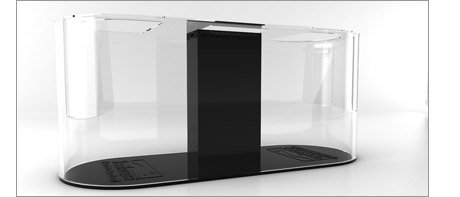
Turn Key Tanks. Read More
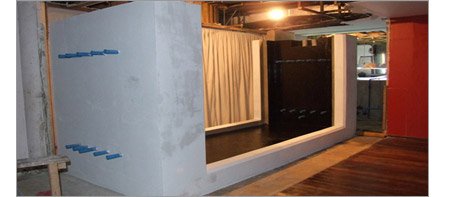
Concrete Tanks. Read More
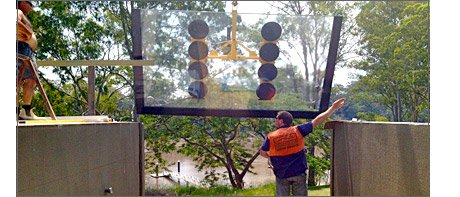
Acrylic Panels. Read More
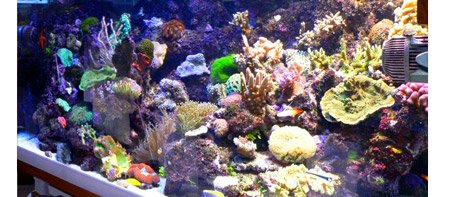
Artificial Rock. Read More
Where it started — early Reefscape Rock™ testing, 2009. An Australian Government R&D grant followed in 2010.
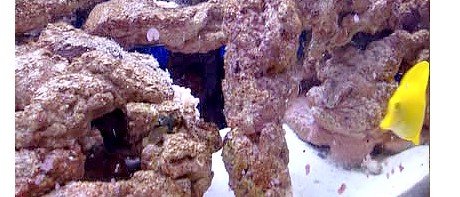
Early testing in a reef aquarium.
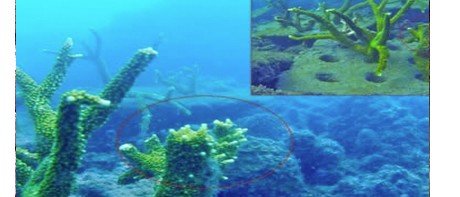
In-sea testing, 2012 — coral and fauna colonisation after two months. From the Coral Alive program.
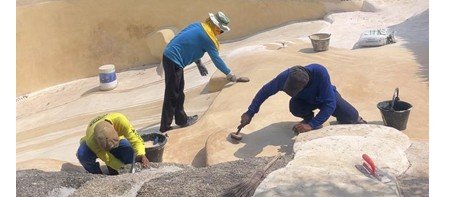
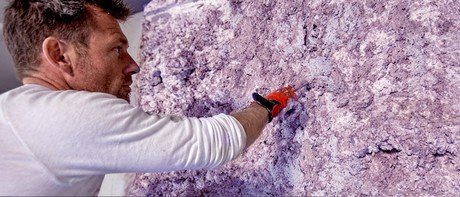
Applied by hand to a living pool.
Reefscape Rock™
There is normally a trade-off in aquatic design. An environment that is easy to keep stable tends to look sterile. An environment that looks spectacular tends to be a maintenance problem — algae, nutrient spikes, water that fights you for the life of the installation.
Reefscape Rock™ is the reason a Reefscape environment does not make you choose. The experience reads as authentic because the biology is real. The water holds because that same biology is doing the work.
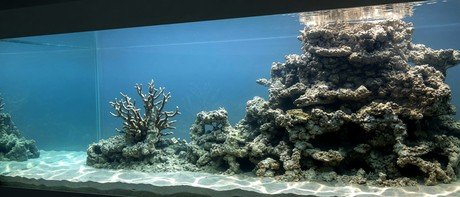
What It Actually Does
There is no shortage of artificial rock on the market. Most of it fails in one of two ways. It arrives in whatever shape the mould produced, and it looks it. Or it is synthetic — carrying chemicals into the water, and never really biologically active.
Reefscape Rock™ has neither problem.
Build any shape. It can be formed into any structure, at any scale — a hobbyist’s aquascape, a public aquarium reef wall, a restoration module for open water.
Structure or surface. It can stand as a structure in its own right, or be applied as a surface to one — a tank wall, a pool, a piece of marine infrastructure.
Use it immediately. It enters the water at a surface pH below 8.5. No curing period, no months of waiting for the chemistry to settle. It has done this since before 2010.
That combination is the point. Make anything you want, and put it in the water the same day.
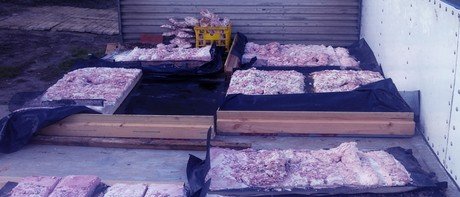
It is supplied as prefabricated panels and structures, cast and cured before they reach site, or built in place by Reefscape’s own crew.
What It Means for a Project
Stable water parameters, held over years rather than chased week to week. An environment that improves as it matures instead of degrading. And a reduction in the mechanical plant a build of this kind would otherwise carry — which is why Reefscape projects are frequently costed and delivered differently to a conventional aquarium build.
Fifteen Years, and Every Project
Development began with an Australian Government R&D grant awarded to Reefscape in 2010. It has been refined continuously since, and it has been used in every Reefscape installation.
Reefscape Rock™ has been used in private residences, public aquaria, filtration systems and open-ocean coral restoration — in Australia, Southeast Asia and the Middle East. The record is on this site: the Toorak residence in Melbourne, the Koh Samui reef aquarium, the Coral Alive restoration program in the Gulf of Thailand and the Andaman Sea, and most recently a project in Bahrain. One material, doing very different jobs, across fifteen years and three continents.
Five Applications, One Material
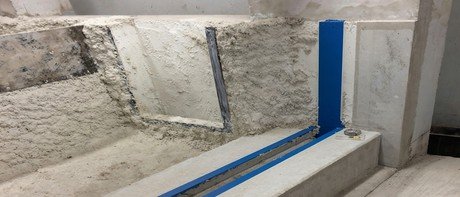
Tank walls. The structural lining of the aquarium itself.
Filtration. Used inside the filter tanks — where no visitor will ever see it, and where it is doing the work.
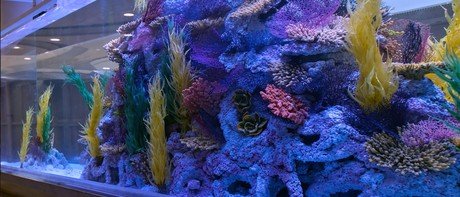
Decorative structure. The reef, the ledges, the caves — the environment the visitor actually reads.
Open sea. Deployed as the substrate for coral restoration in the Gulf of Thailand and the Andaman Sea.
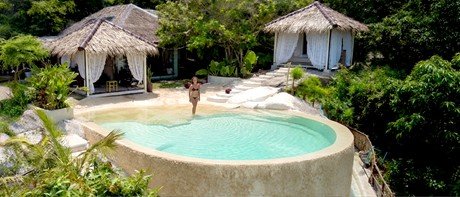
Swimming pools. Applied to a living pool, inside and out. It is the biological surface that lets a pool hold clear water without chemistry, and it is the surface you actually see.
The filtration point is the one worth sitting with. Reefscape uses the same material in the places nobody looks as in the places everybody does. That is not a design decision. It is what happens when the thing that makes an environment beautiful and the thing that keeps it stable are the same thing.
Who Uses It
Hobbyists and reef keepers. Build your own rock structures and aquascapes, or drop pre-made panels straight into the tank during setup.
Public aquaria and commercial builds. Prefabricated structures manufactured off site and installed into large aquaria.
Restoration and marine infrastructure. Deployed directly into open sea as reef substrate.
Living pools. Applied to the pool, inside and out, as the biological surface.
Tested, Not Assumed
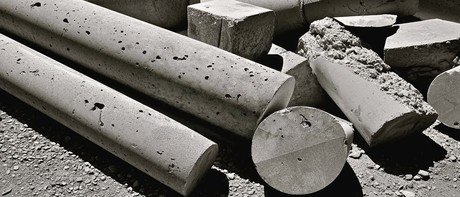
Reefscape Rock™ has been compression tested, cast and cured to specification, and installed by Reefscape’s own hands on every project it appears in. It has been proven in closed aquaria and in open water — and monitored across fifteen years of running environments.
In the Coral Alive program in 2012, structures placed in open sea showed coral and fauna colonisation after two months. Structural test data is available to project clients.
The Part We Don’t Publish
The composition and method behind Reefscape Rock™ are not published while intellectual property protection is being renewed. The results are. Technical information is available to project clients under confidentiality.
If you are developing an aquarium, a marine exhibit or a coastal environment and want to understand what Reefscape Rock™ means for your project and your budget — the conversation starts with a call.