 Turn Key Tanks
 Concrete Built
 Acrylic Panels
 Artificial Rock
Turn Key Tanks. Read More
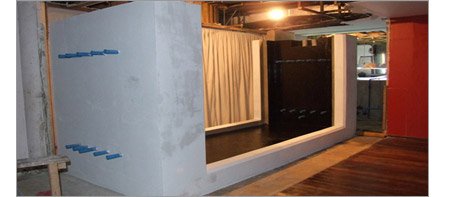
Concrete Built. Read More
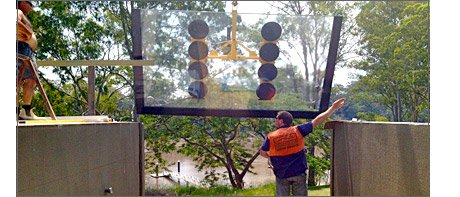
Acrylic Panels. Read More
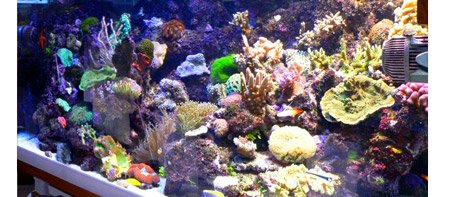
Artificial Rock. Read More
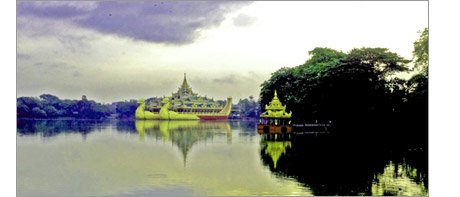
The Royal Lake, Yangon — site of the proposed inland underwater restaurant.
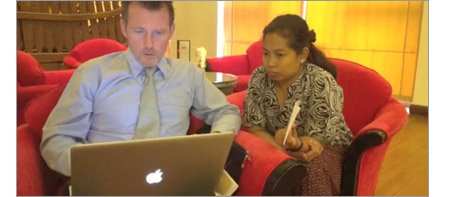
Craig Stuart verifies site data with local structural engineers on the ground.
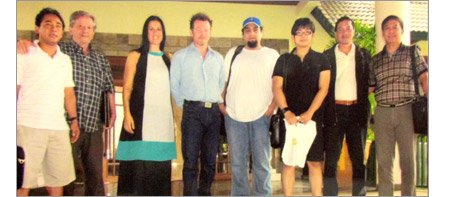
Reefscape and client team — Myanmar 2012.
Underwater Restaurant Design — Myanmar
Location: The Royal Lake, Yangon & Prince Island, Andaman Sea — Myanmar
Client: Pinnacle Solutions Myanmar Co Ltd
Role: Concept Design, Structural Analysis, Site Investigation, Viability Study
Year: 2012
Capacity: 20 diners
Status: Concept — unbuilt
Design period: 8 months
The Commission
In 2012 Reefscape was engaged by Pinnacle Solutions Myanmar Co Ltd to design two underwater restaurants — one on The Royal Lake in central Yangon, the other off the shore of Prince Island in the Andaman Sea south of Palu Buda Island. Two sites. Two entirely different environments. Two completely different engineering and design problems.
The Royal Lake commission was the more unusual of the two. An underwater restaurant in a freshwater urban lake in the middle of a capital city had no precedent anywhere in the world. Every underwater restaurant built to that point had been marine — salt water, coral reef, open ocean. The Royal Lake required a completely different approach to structure, visibility, biology and guest experience.
What the Site Data Actually Said
The client’s team had briefed the offshore Andaman Sea site as shallow water — the kind of depth that makes a marine underwater restaurant straightforward to design and construct. When Reefscape arrived on site and conducted a proper investigation — diving, jet probing, core sampling, 100-year wave data analysis — the reality was different. The actual safe operational depth for a permanent structure was 12 metres, not 5. The wave loading at that location was significantly more perilous than the client had understood.
That finding doubled the structural complexity and materially changed the construction cost. It also created an immediate problem with the client — a team who had been expecting one number and were now hearing another. Reefscape’s position was straightforward: the depth the data demanded was the depth the structure had to be designed for. Building to the client’s original assumptions would have produced a structure that a significant storm event would destroy. The site investigation wasn’t inflating the price. It was protecting the investment.
That tension — between what a client wants to hear and what the engineering actually says — is something Reefscape has navigated on every major project. The answer is always the same. The data wins.
The Design Problem This Created
Twelve metres of depth in open ocean introduces a challenge that every underwater restaurant designer eventually confronts: water clarity is not guaranteed. On a good day in clear tropical water the experience of dining surrounded by reef life is extraordinary. On a poor visibility day — after rain, with suspended sediment, in seasonal conditions — the view through the acrylic is grey water and not much else. The two Maldives restaurants operate in exceptionally clear lagoon environments where this is rarely a problem. The Andaman Sea at 12 metres is a different proposition.
This is the problem that every serious underwater restaurant designer has to solve — and most don’t, because most rely on the ocean to perform. Reefscape’s response was to design the environment rather than depend on it.
Designing the Experience
The concept that emerged from the Myanmar programme was to populate the exterior of the underwater restaurant with permanent sculpted scenes — humorous, social, human — that create theatre regardless of what the water is doing outside. Diners seated at the restaurant look out not just at water and passing fish but at a cast of characters: figures at tables, a waiter mid-spill, champagne upended over an unsuspecting guest with coral growing from her hair. Scenes that invite looking, that reward closer inspection, that get funnier and stranger as the reef colonises the sculpture over time.
These are not decorative additions to the structure. They are the experience itself on a low-visibility day — and an additional layer of extraordinary on a high-visibility day when fish weave through the scenes and coral encrusts the figures in ways no artist could have planned.
The medium for all of it is Reefscape Rock™ — Reefscape’s proprietary substrate. The sculpture doesn’t degrade. It develops. A dining environment that is more alive, more detailed and more extraordinary in year ten than it was on opening day.
The Marina Opportunity
The Myanmar programme also opened a strategic insight that has informed Reefscape’s thinking about the underwater restaurant market ever since. The most natural home for an underwater restaurant is not an isolated reef location. It is a marina.
A marina already has the infrastructure — berthing, power, water, access, foot traffic. An underwater restaurant positioned within a marina development transforms the surrounding real estate. Every apartment, every berth, every commercial tenancy within view of it becomes more valuable. The restaurant is not just a hospitality offering. It is a permanent, visible, talked-about asset that differentiates an entire development from every comparable project in the market.
Across Southeast Asia and the Middle East, marina developments are being planned and built at scale. The Red Sea coastline is one of the most vibrant marine environments on earth — new structures colonise quickly, attracting fish life within weeks. That same colonisation speed that creates extraordinary visual richness also requires careful management of the acrylic and structural surfaces. Reefscape has thought through both sides of that equation.
The Engineering Pedigree
The only engineer in the world to have designed and deployed multiple underwater restaurants is Mike Murphy of M.J. Murphy Ltd, New Zealand — the practice behind the world’s first undersea restaurant, Ithaa, at Conrad Maldives Rangali Island in 2005, and the Hurawalhi Island Resort restaurant in 2016. Both are still operating today. Reefscape and M.J. Murphy have a long professional relationship — Murphy’s firm provided structural engineering guidance on a number of Reefscape’s large-scale aquatic installations, documented on both practices’ records. That relationship, and the depth of accumulated knowledge it represents, informs every underwater structure Reefscape designs.
The Market Today
The global insurance market has been the single greatest barrier to underwater restaurant development worldwide. Getting design and construction insurance for a submerged hospitality structure is a cost that has stopped more projects than any engineering challenge. Reefscape understands this barrier — and has thought carefully about how project structure, phasing and risk profile can be configured to make a UWR insurable and fundable.
The Middle East is the most likely next market. The budgets are there. The ambition is there. The marina developments are being planned right now. An underwater restaurant in the Red Sea, the Arabian Gulf or a resort development on the Saudi coastline is not a fantasy — it is a brief waiting for the right practice to pick it up.
If you are that client — the conversation starts with a call.