 Turn Key Tanks
 Concrete Built
 Acrylic Panels
 Artificial Rock
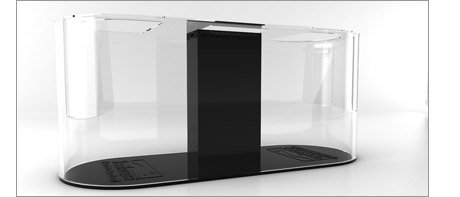
Turn Key Tanks. Read More
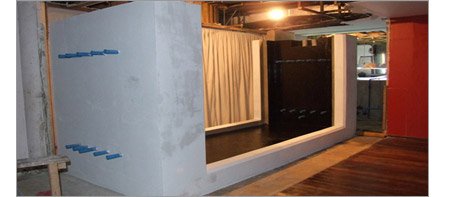
Concrete Built. Read More
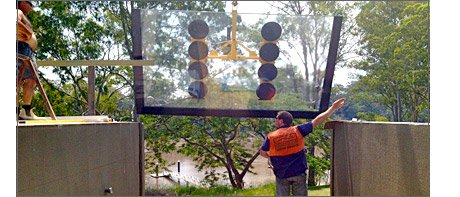
Acrylic Panels. Read More
Artificial Rock. Read More
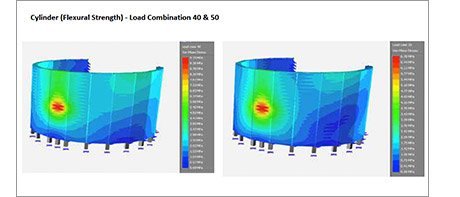
Design: the acrylic modelled before it was cast
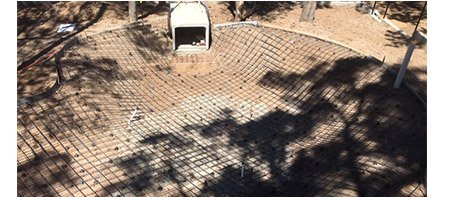
Lone Pine’s build — reinforcement and precast by Frank Mikula.
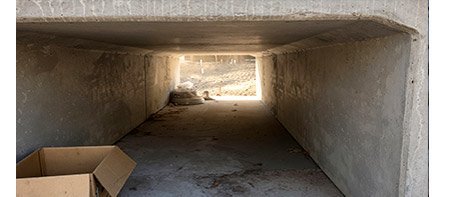
The concrete tunnel taking shape
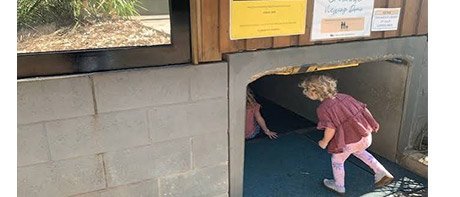
The result: children walk to the middle of a crocodile pool, safely.
CROCODILE OBSERVATION DOME
Lone Pine Koala Sanctuary, Australia — 2022
Location: Fig Tree Pocket, Brisbane, Australia
Client: Lone Pine Koala Sanctuary
Exhibit Concept: Frank Mikula, Curator, Lone Pine Koala Sanctuary
Reefscape’s Role: Design & supply of the acrylic
Acrylic Installation: Bevan Fogerty — Pool Windows Pty Ltd, Brisbane
Structural Certification: Mordue Engineering Pty Ltd
The Acrylic: 1.8m observation dome (80mm)
The Brief
The world’s first and largest koala sanctuary, Lone Pine wanted visitors to do something remarkable at its new saltwater crocodile exhibit: stand inside the water and look up as Australia’s largest reptile swims overhead. The exhibit was the concept of the sanctuary’s curator, Frank Mikula, who approached Reefscape to design and supply the acrylic at its heart — an observation dome set into the floor of the crocodile pool, reached through a tunnel so guests surface, dry, in the middle of the enclosure. Alongside it, a large curved acrylic window — 3.6 metres long, 80mm thick — gives a full above-and-below-water view of the crocodile from the enclosure edge.
Designed for the Load — Including the Crocodile
Reefscape designed and supplied the acrylic — the dome and the curved window — as cast pieces 80mm thick, engineered to stay optically flawless under every load they will ever see, so a visitor sees the crocodile, not the material. And the certified structural design didn’t stop at the water. A crocodile strike was modelled as its own load case: a 1,100-kilogram saltwater crocodile hitting the acrylic at speed resolves to an impact of roughly 36 kN — more than a light-traffic car-park barrier is required to resist under AS1170.2. Against that impact, the full water column and the animal’s resting weight, the acrylic was finite-element analysed and certified by Mordue Engineering Pty Ltd to a factor of safety of 11.2. In plain terms: the barrier between an apex predator and a child standing beneath it was engineered for the predator — not just the water.
Built on Solid Ground
The dome and window seat onto a concrete tunnel, slab and precast panel, sealed on soft, engineered joints that let the acrylic and the structure behave independently. Reefscape’s responsibility was the acrylic — designed and supplied to specification. On site, it was fitted by Bevan Fogerty of Pool Windows Pty Ltd, Brisbane, working to the seating and jointing detail the design required. The surrounding structure was built by Lone Pine and its contractors, under curator Frank Mikula’s supervision, to the connection loads and deflection limits the design set.
The Result
A 360-degree underwater window into a crocodile’s world — one of Brisbane’s standout wildlife experiences, and a piece of acrylic engineering that puts the public safely, and spectacularly, beneath an apex predator.
Specification:
- 1.8m acrylic observation dome, 80mm thick, ~915mm radius of curvature
- 3.6m long × 2.1m high curved viewing window, 80mm thick
- Both engineered for the ~36 kN crocodile-impact load case (AS1170.2 benchmark); FEA-verified and certified to a factor of safety of 11.2 — Mordue Engineering Pty Ltd
- Cast, bonded and finished to acrylic-standard joint specifications
- Seated on engineered soft joints to a concrete tunnel, slab and precast panel (structure by Lone Pine)
- Acrylic fitted on site by Pool Windows Pty Ltd, Brisbane (Bevan Fogerty)